Rocket Lab · RKLB
Rocket Lab's customers paid more for Neutron before its first flight slipped to 2027
Rocket Lab signed Neutron missions at a higher price in the quarter before the rocket's debut slipped again, and the profit milestones it ties to that flight now wait on a date with no quarter.
3 min read Published on

Published by
Inve Content team
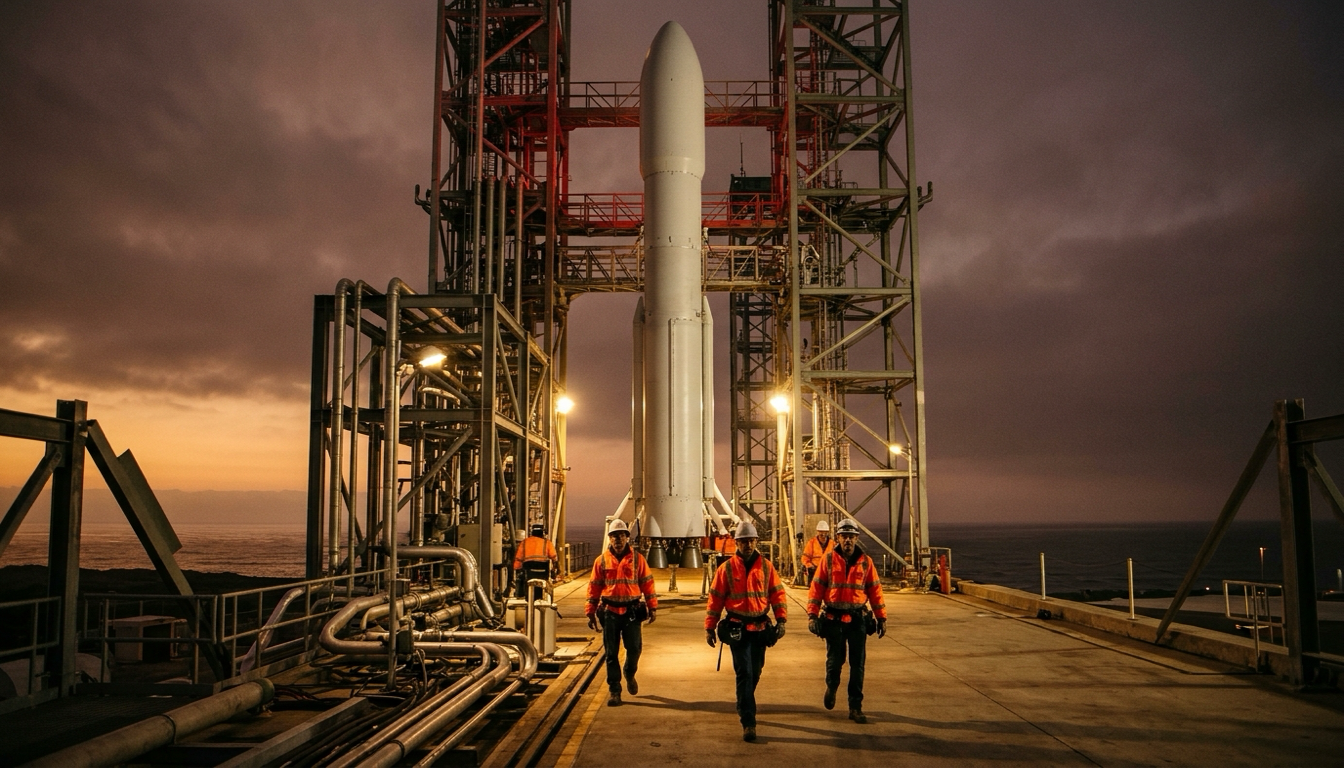
On 9 November Rocket Lab said the first flight of Neutron, the larger rocket it is building to sit above its small Electron launcher, is now targeted for no earlier than 2027. Peter Beck, the founder and chief executive, said the date moved after voids turned up in a dome of the propellant tanks. Asked for a month, he would not give one until the first-stage tank has passed its tests. "I just don't want to be continually wrong," he said.
The caution has a record behind it. In February 2025 the company planned the first launch for the second half of that year. Against the latest guide at each call, the company has given a later launch date three times in the eight calls from February 2025 to November 2026: on 10 November 2025, on 26 February 2026 and now. The February 2026 delay was also traced to the first-stage tank, then to a manufacturing defect. This time it gave a year and nothing finer.
Customers were still signing before this delay was announced. In the third quarter, which ended two weeks before Rocket Lab moved the launch to 2027 on 14 October, it signed more than $515 million of Neutron contracts with satellite-constellation operators, taking the rocket's order book to 16 missions before its debut, and lifted the base price to $70 million for several of them. Beck put the quarter's Neutron signings at eight launches. In August the company was quoting $50 million to $55 million a launch. Adam Spice, the chief financial officer, said Rocket Lab could have booked more Neutron launches than it did, "but we actually chose to go for higher ASP and lower volumes", ASP being the average selling price. He said these contracts carry real deposits and cancellation fees rather than options.
Money customers paid ahead of delivery more than doubled in the nine months to September
$m
Contract liabilities
- $195.4 million 31 Dec 2025
- $423.6 million 30 Sep 2026
The date matters beyond engineering because Rocket Lab ties its profit timetable to it. In August management guided that adjusted EBITDA would turn positive in the quarter after Neutron's first successful launch, and cash flow 18 to 24 months after that. Adjusted EBITDA is earnings before interest, tax, depreciation and amortisation, with stock compensation and other items the company treats as outside its ongoing operations also left out. On 9 November Spice said the measure will turn positive within six months of a successful test flight and that "cash flow is going to follow that". How soon, he said, depends on how much the company spends building a fleet of Neutrons, which will take longer. With the flight set for no earlier than 2027, both markers now sit behind a date that has no quarter.
Until then the company is losing money. The adjusted EBITDA loss for the September 2026 quarter was $18.0 million, smaller than the $26.3 million of a year earlier, but the net loss widened to $79.7 million from $18.3 million, swollen by Iridium deal costs and a $27.3 million loss on extinguishing debt, while a tax benefit had cushioned the year-earlier figure. Operating cash flow turned positive, which Spice put down to milestone payments on satellite programmes rather than earnings. Management also booked a reserve against expected losses on Neutron's second flight, reflecting how young the vehicle is.
The wider order book grew as well. Total backlog reached $3.57 billion at the end of September, up by about half in a quarter.
Rocket Lab's total backlog has more than tripled in a year
$bn
Total backlog
- $1.1 billion Q3 2025
- $2.36 billion Q2 2026
- $3.57 billion Q3 2026
Rocket Lab can pay for the wait. It held $4.45 billion of cash at 30 September, raised partly through share sales that also fund its pending purchase of Iridium Communications, a deal the company said is now fully financed.
The record: full financial tables
Financials
Income statement, last 8 quarters
| Quarter end | Sales | YoY | Operating profit | Op. margin | Other income | PBT | Net profit |
|---|---|---|---|---|---|---|---|
| Sep 2026 | 268 | +72.7% | −79.2 | −29.6% | 3.0 | −76.2 | −79.7 |
| Jun 2026 | 234 | +62.0% | −57.5 | −24.6% | 13.6 | −43.9 | −49.3 |
| Mar 2026 | 200 | +63.4% | −56.0 | −28.0% | 9.2 | −46.8 | −45.0 |
| Dec 2025 | 180 | +35.7% | −51.0 | −28.4% | 9.4 | −41.6 | −52.9 |
| Sep 2025 | 155 | +48.0% | −59.0 | −38.0% | −0.4 | −59.3 | −18.3 |
| Jun 2025 | 145 | +35.9% | −59.6 | −41.2% | −3.8 | −63.5 | −66.4 |
| Mar 2025 | 123 | +32.1% | −59.2 | −48.3% | −2.2 | −61.4 | −60.6 |
| Dec 2024 | 132 | +120.7% | −51.5 | −38.9% | −0.1 | −51.7 | −52.3 |
Balance sheet
| As of | Equity | Debt | Cash | Investments | Fixed assets | Total assets |
|---|---|---|---|---|---|---|
| Sep 2026 | 5,803 | 1.7 | 4,448 | 160 | 410 | 6,569 |
| Jun 2026 | 3,492 | 1.7 | 2,130 | 173 | 394 | 4,187 |
| Mar 2026 | 2,264 | 1.7 | 1,206 | 178 | 344 | 2,820 |
| Dec 2025 | 1,722 | 1.7 | 829 | 188 | 320 | 2,325 |
Cash flow
| Year end | Operating | Investing | Financing | Free cash flow |
|---|---|---|---|---|
| Dec 2025 | −166 | −347 | 1,071 | −322 |
| Dec 2024 | −49 | −98 | 257 | −116 |
| Dec 2023 | −99 | 12 | 7 | −154 |
| Dec 2022 | −107 | −346 | 2 | −149 |